Why we built AtoMik – A Different Approach to Scalable Electronics Testing Systems
For many years, we worked with electronics manufacturers developing custom functional test systems, automated test solutions, and production test platforms. Every project was different. Different products. Different industries. Different production environments. Yet despite the differences, we kept encountering the same challenges.
Projects took longer than expected to industrialize. Test systems became increasingly difficult to maintain. Small product changes triggered large engineering efforts. What started as a test solution often evolved into an infrastructure project of its own.
Interestingly, the test itself was rarely the problem.
Engineers knew which measurements needed to be performed. The measurement technology was available. The challenge usually came from everything surrounding the actual test process: architecture, integration, cabling, software dependencies, maintenance requirements, and years of accumulated complexity.
After seeing this pattern repeatedly, we started asking ourselves a simple question:
Have we accepted unnecessary complexity as a normal part of test?
That question eventually became the starting point for AtoMik.
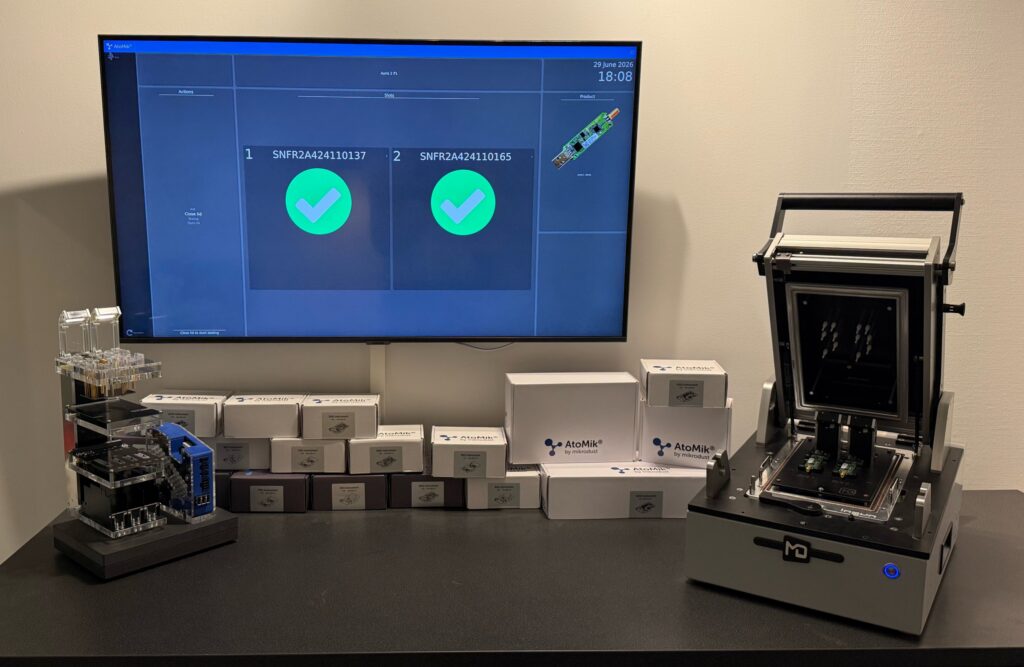
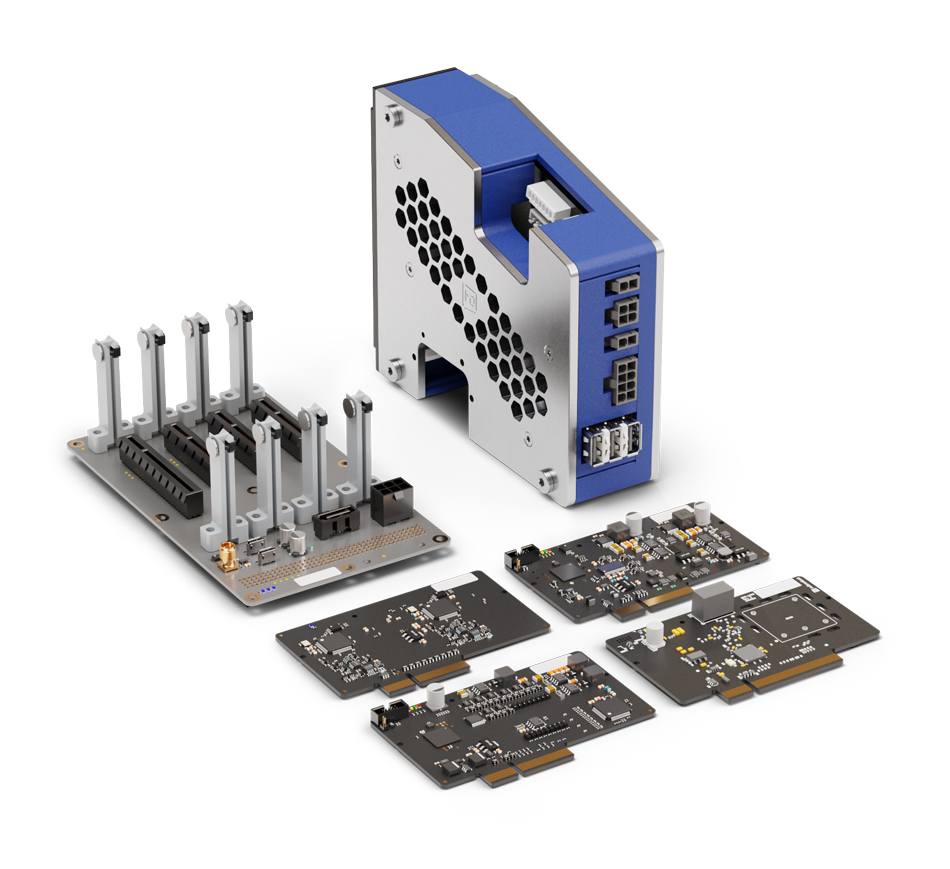
A compact test system is a modular test and measurement system where instrumentation is integrated close to the device under test rather than housed in a large external rack. These scalable electronics testing systems help manufacturers reduce complexity, simplify deployment, and support modern electronics production.
Why Traditional Electronics Test Systems Become Difficult to Scale
1. Oversized Footprints
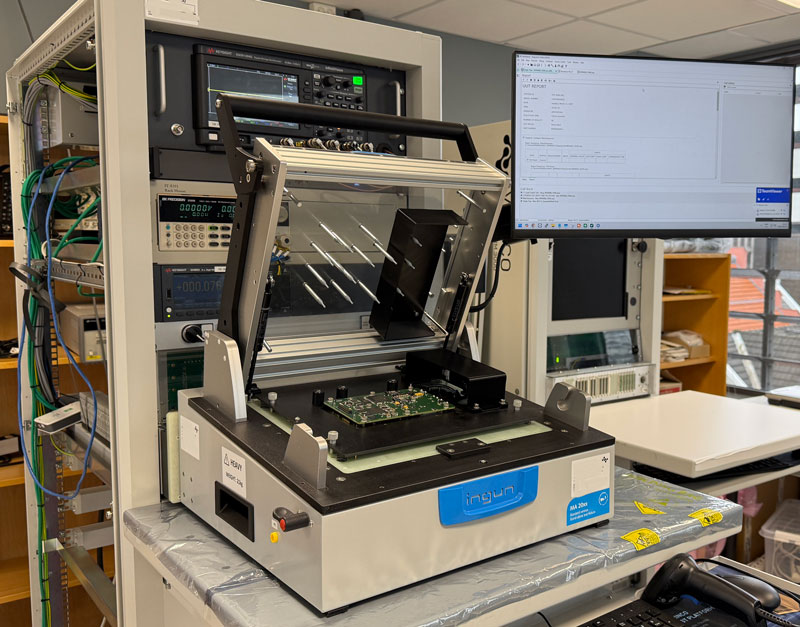
Many test systems occupied significantly more floor space than the actual application required.
Large racks of instruments, interface hardware, switching systems, and supporting equipment consumed valuable manufacturing space that could otherwise be used for production.

2. Custom Integration Projects
Each new test station often required substantial engineering effort simply to make different hardware and software components work together.
Instead of focusing on test functionality, teams spent months integrating technologies that had never been designed as a unified system.
3. Cable Complexity in Rack-Based Automated Test Systems (wiring)
This was perhaps the most visible symptom of all.
As systems evolved over time, additional instruments, measurement paths, and interface layers introduced more wiring. What started as a clean implementation eventually became increasingly difficult to troubleshoot and maintain.
The problem was not the cables themselves.
The problem was an architecture that depended on hundreds—and in some cases thousands—of connections functioning flawlessly every day.
For RF testing, the impact was often particularly noticeable. Additional cables, connectors, and interfaces could introduce instability, measurement variation, and unnecessary complexity.

4. Slow Industrialization
Moving from a prototype or engineering setup into a production-ready solution often took far longer than expected.
What should have been a straightforward deployment became an extended integration exercise.
5. High Maintenance Costs
As systems aged, support requirements increased.
Calibration schedules, obsolete hardware, software dependencies, spare parts management, troubleshooting, and upgrades all contributed to rising ownership costs throughout the system lifecycle.
The Realization
Eventually, we stopped treating these issues as isolated project challenges.
Instead, we began asking a different question:
What if these weren’t project-specific problems at all?
What if they were architectural problems?
That shift in perspective fundamentally changed how we approached test system design.
Rather than attempting to optimize traditional architectures, we started exploring whether a simpler architecture could remove many of the underlying causes altogether.
Compact Test Equipment: An Alternative to Rack-Based ATE
One observation stood out clearly.
For decades, automated test systems have typically been built around external instruments connected through extensive cabling and interface layers.
As more functionality is added, complexity naturally grows.
We wondered:
If cabling and integration contribute so much complexity, why do we continue building our architectures around them?
That question became one of the key drivers behind AtoMik.
Not because cables are inherently bad.
But because every unnecessary connection, interface, and dependency introduces risk, maintenance effort, and engineering overhead.
Reducing complexity often turns out to be the fastest path to improving reliability.
The Five Design Principles Behind AtoMik
Standardized Integration
Create a repeatable path from fixture development to production deployment rather than reinventing the solution for every project.


Compact by Design
Place test hardware where it is needed and reduce the overall footprint of the test solution – inside the fixture kit.
Built for Reliability
Minimize internal wiring and reduce potential failure points throughout the architecture.
Designed for Real Production Environments
Support practical test-floor requirements such as RF testing, pneumatics, barcode scanners, safety systems, and external accessories without requiring project-specific architectures.
Performance Beyond Expectations
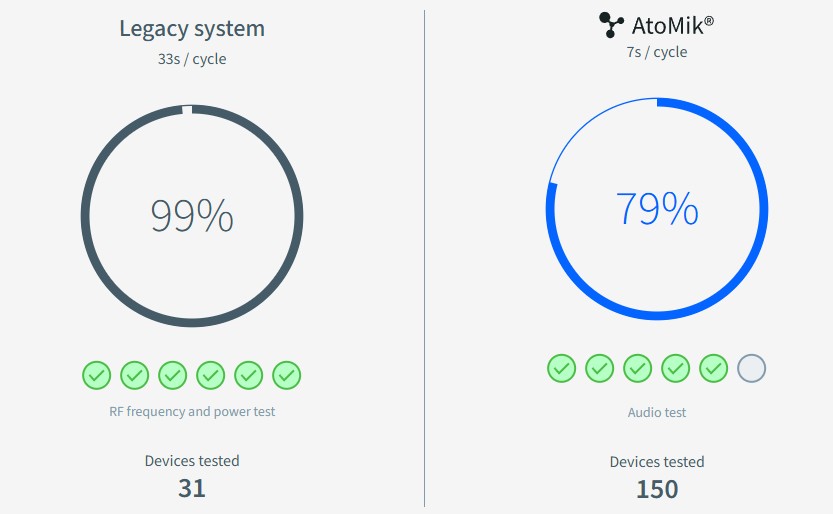
Enable parallel test execution, reduce cycle times, and provide a software architecture designed for long-term maintainability.
From Idea to Production Reality
AtoMik was never conceived as a product looking for a problem.
It emerged from years of practical experience working with manufacturers and repeatedly encountering the same architectural challenges.
Since 2023, AtoMik has been operating in EMS production environments, helping validate many of the design decisions that originated from those experiences.
Looking back, the platform itself is really the outcome.
The lessons came first.
The real journey began when we stopped asking how to build better test systems and started asking whether test systems needed to be this complex in the first place.